
Fitness, preparation and health.
Training, hydration, nutrition, heat, recovery, sleep, strength and mobility.
G01How fit do I need to be before joining a CSD ride?
CSD readiness is not just a fitness score. A rider should be able to control the bike, brake, change gear, turn, hold a line and sustain the advertised pace and distance; about 25 km/h is CSD's practical entry benchmark, with a shorter first distance where appropriate. Build gradually and contact CSD before the first ride. Chest pain or pressure, fainting, severe or unusual breathlessness, or known heart or lung concerns require individual medical advice before strenuous riding. This is general information, not a personal medical clearance.
G02How should I train for my first 50 km, 80 km or 100 km ride?
Start from the distance you can complete comfortably now, then use two shorter rides and one progressively longer ride in many weeks, with easier or rest days between harder sessions. Build time in the saddle before speed, repeat each distance until pacing, food, fluid, repairs and recovery are reliable, and do not increase distance, intensity and frequency together. CSD's approximate 35, 65, 85 and 104 km Saturday options can provide milestones when the rider is ready. A coach or clinician should adapt the plan for injury, illness or medical conditions.
G03How many cycling sessions and rest days should I plan each week?
Two or three rides per week is a practical starting structure for many new cyclists, provided harder sessions are separated by recovery. Short, frequent rides can work when time is limited; a longer weekly window can be used for endurance. WHO's general adult target is 150-300 minutes of moderate or 75-150 minutes of vigorous aerobic activity per week plus muscle-strengthening on at least two days, but previous activity, sleep, health and ride intensity determine the appropriate plan.
G04What are heart-rate, power and perceived-effort training zones?
Perceived effort, heart rate and power describe different things. RPE is the rider’s subjective effort and is always available; heart rate shows the body’s response but rises with heat, dehydration and fatigue; power measures work at the pedals and changes immediately. Use zones to prevent every ride becoming medium-hard, and base them on one clearly defined system and a rider-specific threshold. Avoid generic 220-minus-age prescriptions.
G05What should I eat before an early-morning ride?
Before a long or hard early ride, choose familiar carbohydrate-rich food and fluid that you know you tolerate; with little time, use a smaller, easy-to-digest option. Oats, toast, a banana, dates or a familiar shake are examples, not prescriptions. A short easy ride may not need a large breakfast, but fasted riding is not suitable for everyone and should not be tried for the first time on a demanding group ride. Medical conditions, medication and gastrointestinal issues require individual advice.
G06How much carbohydrate should I consume during a long ride?
For endurance exercise lasting about 1-2.5 hours, 30-60 g of carbohydrate per hour is a useful evidence-based range. For events longer than about 2.5-3 hours, trained riders may use up to about 90 g per hour from multiple transportable carbohydrate sources. Count drink, gels and food together, start below the top of a range, practise the plan in training and adjust for intensity and gut tolerance. Sixty grams per hour is a reference, not a universal minimum.
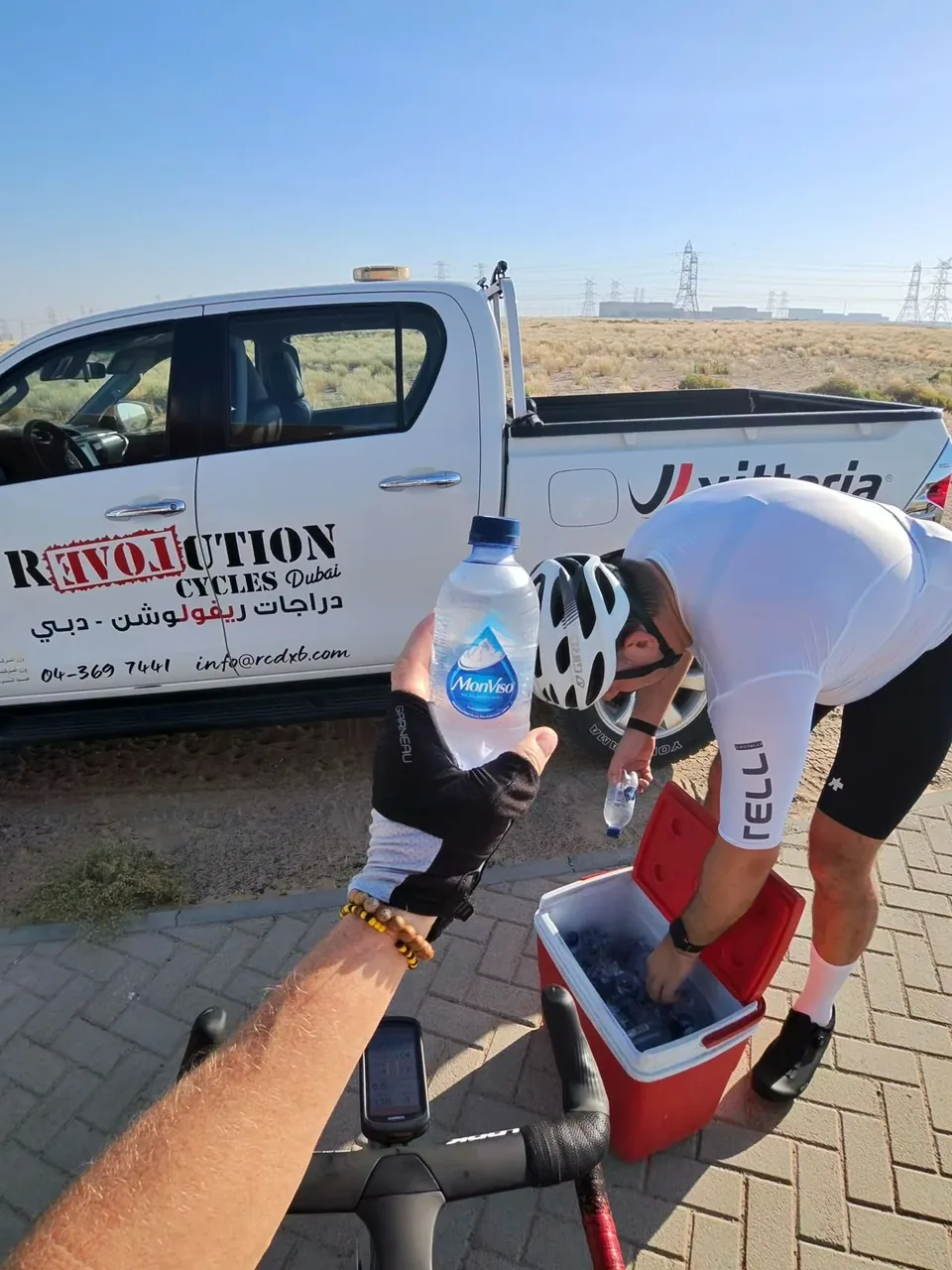
G07How much should I drink when cycling in Dubai heat and humidity?
There is no single correct drinking rate for every Dubai cyclist. A broad endurance starting range of roughly 400-800 mL per hour is sometimes used, but actual need changes with body size, pace, heat, humidity, clothing, acclimatisation and sweat loss. Use thirst as one cue, take regular opportunities to drink and estimate sweat rate in similar conditions; do not force fluid or finish heavier than you started because over-drinking can cause dangerous hyponatraemia. Riders with kidney, heart, blood-pressure or fluid restrictions need individual medical advice.
G08When do I need electrolytes rather than plain water?
Plain water can be enough for a shorter, easier ride when normal meals supply sodium. Electrolytes become more useful during prolonged or very hot rides, for high or salty sweaters, between closely spaced sessions or when rapid rehydration is needed. White marks on clothing show that sweat contained salt but do not measure sodium concentration, so they cannot justify a fixed dose. Check the product label and seek qualified advice for medical conditions or prescribed sodium or fluid restrictions.
G09How can I estimate my personal sweat and fluid needs?
Estimate sweat rate with a representative ride: (pre-ride body mass in kg minus post-ride body mass in kg, plus litres drunk, minus litres urinated) divided by ride hours. Weigh in similar minimal clothing, towel dry first and repeat in cooler and hotter UAE conditions. One kilogram of body-mass change is approximately one litre of fluid. This estimates fluid loss, not sodium concentration; use a validated sweat test and qualified interpretation if sodium replacement is a concern.
G10What are the warning signs of dehydration, heat exhaustion and heat stroke?
Stop riding if a cyclist develops headache, nausea, dizziness, weakness, irritability, heavy sweating, unusual exhaustion or reduced urine; move them to shade or air conditioning, loosen clothing, begin cooling and obtain medical assessment. Confusion, slurred speech, seizure, collapse, loss of consciousness or very high temperature may indicate heat stroke: call the UAE ambulance service on 998 and cool the person rapidly while waiting. Stay with them and do not give drink to anybody who is confused or unconscious.
G11How should I acclimatise when visiting Dubai from a cooler climate?
Heat acclimatisation requires repeated exercise exposure in the heat and usually develops over days, not one ride. A visitor from a cooler climate should make the first week shorter and easier, ride at the coolest practical time, allow extra recovery and increase exposure gradually; even a very fit rider can be vulnerable before adapting. Stop for heat symptoms. Medication or health conditions that affect heat tolerance require clinical advice.
G12What should I eat and drink immediately after a ride?
After a demanding ride, begin with fluid and a normal meal or snack containing carbohydrate and protein. About 20-40 g of high-quality protein is a common recovery reference, while carbohydrate need depends on the ride and the time to the next hard session. If another hard session is close, start recovery promptly; otherwise, a balanced meal within the next few hours is practical. Replace fluid gradually according to loss rather than forcing excessive water, and include sodium through food or drink when sweat loss was high.
G13How much sleep do cyclists need for recovery and performance?
Healthy adults should regularly obtain at least seven hours of sleep, and many athletes function best with roughly seven to nine hours or more when training load rises. Sleep quality, timing and regularity also matter. Too little sleep can impair alertness, reaction, judgement, mood and recovery; a dangerously sleepy rider should miss or delay the ride and should not drive to the start. Persistent insomnia or excessive sleepiness needs clinical assessment.
G14Which strength, mobility and stretching exercises help cyclists most?
A useful cycling foundation trains all major muscle groups about twice each week with movements such as a squat or split squat, hip hinge, calf raise, row or press and trunk stability. Begin with technique and manageable resistance, then progress gradually. Before riding, use easy spinning and controlled dynamic movement; after riding, use gentle mobility for hips, back, hamstrings and calves or a separate 15-20 minute session. Static stretching immediately before hard exercise is not a performance requirement. Stop sharp, radiating or worsening pain and obtain qualified advice for injury or medical conditions.
G15When is pain or fatigue a signal to rest or seek medical advice?
Mild fatigue or delayed muscle soreness should improve with rest and easy recovery. Stop and seek urgent help for chest pain or pressure, fainting, confusion, seizure, severe or unusual breathlessness, suspected heat stroke or concerning symptoms after a head impact; call 998 in a UAE emergency. Arrange prompt clinical assessment for severe or worsening pain, swelling, deformity, numbness, weakness, inability to bear weight or pedal normally, dark or cola-coloured urine, or symptoms that persist. Good cycling shorts and a quality chamois can improve comfort, but they do not explain away persistent numbness, skin breakdown or pain.
General education, not personal medical advice.
Cycle Safe Dubai provides general educational information for adult recreational cyclists. It is not a diagnosis, treatment plan, personalised nutrition programme or substitute for advice from a doctor, registered dietitian, physiotherapist or other appropriately qualified professional. Individual needs vary with health, medication, fitness, acclimatisation, weather and ride intensity.
Stop and seek professional care if symptoms are severe, unusual or worsening. In a UAE emergency call 998. Suspected heat stroke, chest pain, fainting, confusion, seizure, severe or unusual breathlessness, serious injury or concerning symptoms after a head impact require urgent assessment.
Examples are general and are not suitable for everyone. Riders with diabetes, kidney or heart conditions, food allergies or intolerances, eating disorders, gastrointestinal conditions, or prescribed fluid or electrolyte restrictions should obtain individual professional advice.
Exercises must be performed within a comfortable range using suitable technique. Stop if an exercise causes sharp, radiating or worsening pain, dizziness, chest symptoms, weakness or numbness. Seek individual advice before starting if injured, pregnant, returning from illness or managing a medical condition.
Information and external links were reviewed on 21 October 2026 and were accurate to the best of CSD's knowledge at the time of writing. Medical, training and nutrition content is general education, not personal advice. Guidance, facilities, schedules, prices and product information can change, so check the linked source and current local advice before acting.